
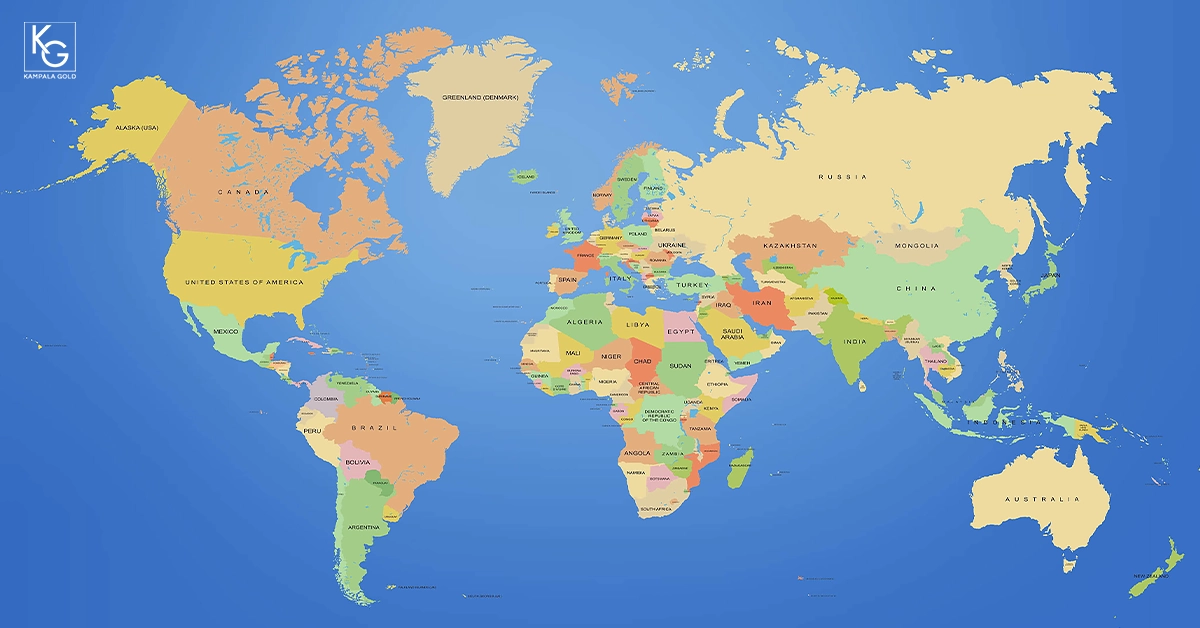
Kiribati is a remote island country made up of scattered atolls across the central Pacific Ocean. It is one of the most geographically dispersed nations in the world, with limited natural resources and a strong dependence on imports.
When discussing gold in relation to Kiribati, it is essential to begin with a clear and grounded understanding:
Kiribati is not a gold-producing country and does not have a developed gold market. Any gold associated with Kiribati is imported or accessed through global supply chains rather than sourced locally.
This means that “buying gold from Kiribati” does not involve local mining or domestic bullion trading—it refers to accessing gold while located in Kiribati using international systems.
Understanding Kiribati’s Economic Structure
Kiribati’s economy is small, fragile, and heavily dependent on external support.
Key Economic Characteristics
- Limited industrial and manufacturing activity
- Heavy reliance on imports for most goods
- Narrow domestic market
- Use of foreign currencies (primarily the Australian dollar)
Because of this:
- Precious metals are not produced locally
- Gold is not part of everyday commerce
- Availability depends entirely on imports
Key Insight
Kiribati functions as a remote consumer endpoint in global trade, not as a production or trading hub for gold.
Does Kiribati Have Gold Resources
There is no significant evidence of commercially viable gold deposits in Kiribati.
- No active mining operations
- No exploration activity at scale
- No gold exports
This leads to a straightforward conclusion:
There is no local gold supply in Kiribati for commercial purchase.
Where Gold in Kiribati Comes From
Any gold available in Kiribati originates from international markets, including:
- Australia (regional gold producer)
- Singapore (Asian bullion hub)
- United Arab Emirates (global trading center)
- Switzerland (major refining hub)
Gold enters Kiribati through:
- Imported jewelry
- Personal purchases brought in by travelers
- International shipments
Because of logistics:
- Supply is extremely limited
- Prices are typically higher than global averages
Where You Can Buy Gold While in Kiribati
Local Retail and Jewelry Shops
In the capital, South Tarawa, you may occasionally find small retail outlets that sell jewelry.
These typically offer:
- 14K or 18K gold jewelry
- Rings, chains, and bracelets
- Imported decorative items
However:
- Inventory is very limited
- Stock is inconsistent
- Prices include significant import and retail markups
Important point:
These shops are not bullion dealers and do not provide investment-grade gold.
International Bullion Dealers
For serious buyers, the most practical and reliable method is to use international bullion dealers.
These dealers provide:
- Gold bars in multiple sizes
- Investment-grade coins
- Certified high-purity gold
The process typically involves:
- Selecting products through a verified platform
- Making secure payment
- Choosing delivery or storage
Advantages include:
- Access to global pricing
- Verified authenticity
- Wide selection
Online Gold Platforms
Online platforms are often the most efficient option for buyers in Kiribati.
They allow users to:
- Purchase physical gold
- Hold gold in secure vaults
- Invest in digital or fractional gold
Benefits include:
- Accessibility regardless of location
- Transparent pricing
- Flexible investment options
Types of Gold You Can Access from Kiribati
Jewelry Gold
- Most common locally
- High markup
- Not ideal for investment
Investment Gold Bars
- Available through international dealers
- High purity
- Suitable for long-term investment
Gold Coins
- Globally recognized
- Easy to resell
- Flexible investment option
Digital or Allocated Gold
- Stored securely abroad
- No need for physical delivery
- Ideal for remote buyers
Logistics: Delivering Gold to Kiribati
Shipping gold to Kiribati is possible but presents challenges.
Delivery Process
- Shipment via insured international courier
- Customs clearance upon arrival
- Final delivery to the buyer
Challenges
- High shipping costs
- Limited courier availability
- Long delivery times
- Potential customs delays
Practical Alternative
Many buyers prefer to:
- Store gold in international vaults
- Avoid logistical complications
Pricing of Gold in Kiribati
Gold prices are influenced by:
Global Factors
- International gold spot price
- Currency exchange rates
Local Factors
- Shipping and insurance costs
- Import-related expenses
- Retail markups
Key insight:
Gold is typically more expensive in Kiribati due to its remote location and limited supply.
The Reality: Kiribati Is Not a Gold Market Hub
Kiribati does not have:
- Gold mining operations
- Refining facilities
- Bullion trading infrastructure
- Competitive dealer networks
This means:
Kiribati is not a source of gold—it is a remote access point dependent entirely on external supply.
The Most Effective Strategy for Buyers
Local Buying
Best suited for:
- Jewelry purchases
- Personal use
Not suitable for:
- Investment
- Bulk buying
Global Sourcing
Recommended for serious buyers:
- Purchase gold from international dealers
- Use certified bullion products
- Store gold securely in global vaults
Benefits include:
- Lower premiums
- Better liquidity
- Higher security
- Verified authenticity
Risks When Buying Gold Linked to Kiribati
Limited Local Infrastructure
- Few reliable sellers
- Minimal oversight
High Costs
- Shipping and logistics expenses
Verification Challenges
- Limited testing facilities
Online Fraud
- Sellers falsely claiming local presence
Kiribati Compared to Other Oceania Gold Markets
- Australia: Major gold producer
- Papua New Guinea: Active mining sector
- Fiji: Small but functional gold industry
- Kiribati: Import-dependent with no production
Kiribati is best understood as a remote consumer market with no independent gold ecosystem.
Real Buyer Scenarios
Resident Buyer
- Purchases jewelry locally
- Pays high retail markup
Outcome: Convenient but not investment-efficient
Remote Investor
- Buys gold online
- Stores it internationally
Outcome: Secure and practical
International Trader
- Sources gold globally
- Uses Kiribati only as a residence
Outcome: Efficient and scalable
Frequently Asked Questions About Buying Gold from Kiribati
- Can I buy gold in Kiribati?
Yes, but mostly jewelry and imported items. - Is Kiribati a gold-producing country?
No, there is no gold production. - Are gold bars available locally?
Very rarely; usually imported. - Is gold cheaper in Kiribati?
No, often more expensive due to logistics. - Can foreigners buy gold in Kiribati?
Yes, but options are limited locally. - What is the safest way to buy gold?
Through international bullion dealers. - Can gold be shipped to Kiribati?
Yes, with insured delivery and customs clearance. - What are the main risks?
Limited infrastructure and verification challenges. - Is Kiribati good for gold investment?
Not locally; better through global markets. - What is the best strategy?
Use global sourcing and secure storage.
Conclusion: Buying Gold from Kiribati Requires a Global Perspective
Kiribati clearly demonstrates how gold access is not about location, but about connectivity to international markets.
The key takeaway is:
You do not buy gold from Kiribati—you access gold through global systems while residing in or connected to the country.
By adopting a structured international approach, buyers can:
- Access certified gold
- Ensure authenticity and compliance
- Avoid excessive costs
- Participate effectively in the global gold market
Even in one of the most remote countries in the world, gold remains accessible through established global networks built on trust, verification, and efficiency.
Leave a Reply