
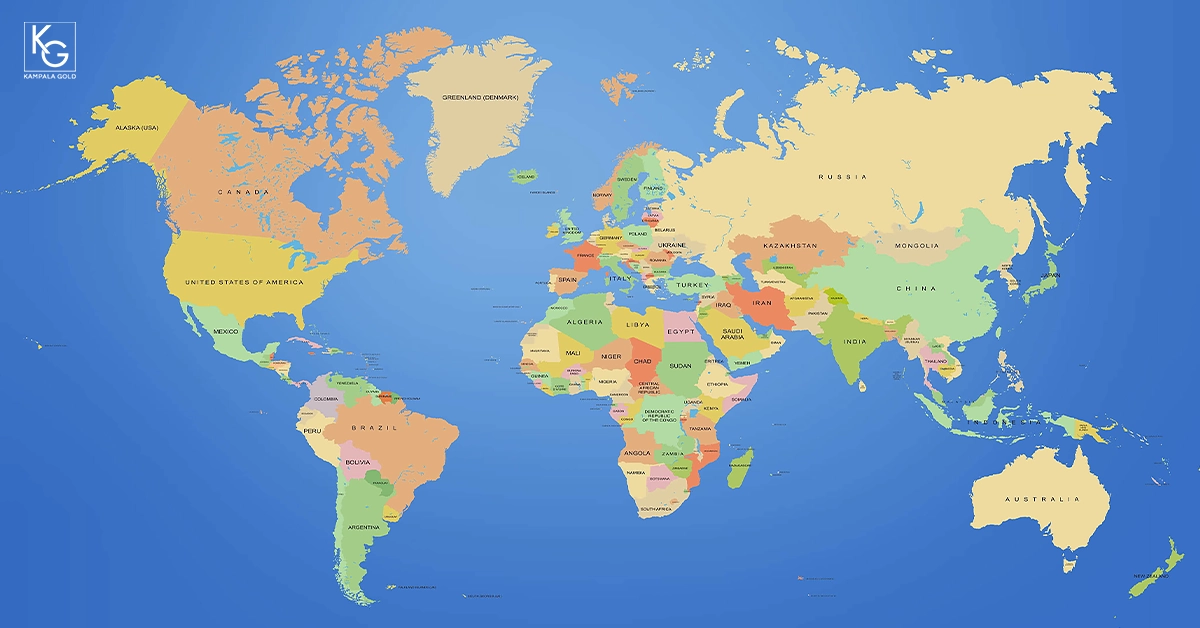
Kampala Gold (U) Limited is positioned as a trusted participant in the international precious metals trade, specializing in structured gold transactions, export coordination, compliance support, and secure delivery solutions for clients across Africa, the United States, Europe, Asia, and other global markets. In high-value commodity trade, confidence, documentation, and process control are critical. This is why many serious buyers prefer to work with suppliers who can combine product access with clear procedures and professional transaction management.
One of the most practical ways to move gold internationally is through CIF (Cost, Insurance, and Freight) delivery terms. Under CIF, the shipment is organized in a structured way where transport, insurance, and freight are arranged up to the agreed destination, while both parties follow clearly defined commercial responsibilities. When properly executed, CIF can reduce uncertainty, simplify logistics, and create a more professional buying experience.
For buyers seeking a reliable route into the gold market, Kampala Gold (U) Limited’s structured model emphasizes transparency, legal ownership assurances, secure handling, refinery-based verification, and settlement after final assay. This helps align trust with measurable performance.
Understanding CIF in Gold Trading
CIF stands for Cost, Insurance, and Freight. It is one of the most recognized international trade terms used in cross-border commodity transactions.
Under CIF delivery terms, shipment is organized to the agreed destination refinery, airport, or port, with freight and insurance incorporated into the delivery structure.
Why CIF Is Valuable in Gold Trade
Gold is a high-value commodity that requires:
- Secure transport
- Insurance protection
- Accurate documentation
- Chain-of-custody control
- Compliance with export and import rules
- Professional handling from origin to destination
CIF helps organize these moving parts into a single structured framework.
Why Buyers Work with Kampala Gold (U) Limited
International buyers often need more than a gold supplier—they need a transaction partner that understands logistics, documentation, compliance, and secure settlement.
Key Advantages
- Experience in international gold transactions
- Structured CIF delivery procedures
- Support for refinery-based verification
- Strong focus on documentation
- Clear payment framework
- Security-conscious shipment handling
- Professional communication with buyers
- Ability to work with international refineries
- Practical solutions for global clients
For many buyers, this creates a more efficient and lower-risk transaction path.
Seller’s Procedure
Kampala Gold (U) Limited follows a professional transaction sequence designed to build trust, verify product quality, and protect both parties throughout the deal.
Step 1: Buyer Signs and Returns the FCO
The Buyer signs and returns the Full Corporate Offer (FCO) to confirm formal acceptance of the transaction terms.
This step establishes:
- Intent to purchase
- Acceptance of key commercial terms
- Readiness to proceed
- Basis for next-stage coordination
A signed FCO helps both parties move forward with clarity and seriousness.
Step 2: Buyer Meets Seller in East Africa for Introduction and Trust-Building
The Buyer meets the Seller in East Africa for relationship-building, identity verification, and operational planning.
This stage may include:
- In-person introductions
- Verification of company representatives
- Review of procedures
- Relationship development
- Discussion of logistics and schedules
- Strengthening commercial trust
Face-to-face engagement can significantly improve confidence in high-value commodity transactions.
Step 3: Buyer Conducts Preliminary Assay at an Agreed Local Refinery
Before export, the Buyer may conduct a preliminary assay at a mutually agreed local refinery.
This provides early-stage confirmation of:
- Gold purity
- Approximate recoverable content
- Weight consistency
- Product suitability for shipment
Using a neutral refinery helps reduce disputes and supports transparency.
Step 4: Buyer Covers Export and Shipment-Related Costs
The Buyer covers all agreed export and shipment-related costs connected to moving the consignment to the destination refinery.
These costs may include:
- Export processing charges
- Freight costs
- Insurance premiums
- Customs handling charges
- Security coordination
- Documentation fees
- Airport handling charges
- Logistics administration costs
Clear allocation of costs prevents misunderstandings later in the transaction.
Step 5: Both Parties Travel to the Destination Refinery for Final Assay and Settlement
Seller and Buyer representatives travel to the agreed destination refinery, where the final professional assay is conducted.
This is one of the most important stages because it determines:
- Final purity result
- Final payable gold content
- Settlement value
- Final commercial reconciliation
A recognized destination refinery creates an objective basis for payment.
Step 6: Buyer Completes Full Payment Within Three Working Days After Final Assay
Following the final assay report, the Buyer completes full settlement within three (3) working days, subject to the agreed payment terms.
This structure can reduce unnecessary prior fees and ties final payment to verified refinery results.
Terms of Payment
Payment shall be made via:
- Direct Telegraphic Transfer (TT/TWT)
- Cryptocurrency (if agreed by both parties)
Funds are sent to the Seller’s designated account within three (3) working days following the final assay report at the destination refinery.
Why This Matters
This payment structure links settlement to independently verified assay results, helping both parties align value with measurable output.
Seller Warranties
Kampala Gold (U) Limited warrants that:
- The product described is in the Seller’s legal possession
- The Seller holds full beneficial ownership of the product
- The Seller has full authority and legal capacity to sell the product
These warranties are important because they strengthen legal certainty and commercial confidence.
Release of Gold
Upon receipt of full payment, the refined gold shall be released to the Buyer.
Ownership, Responsibility, and Control During Delivery
The gold remains under the ownership of the Seller throughout the delivery process, under joint care, custody, and control of both Seller and Buyer representatives.
This applies from:
- Export in East Africa
- International shipment
- Arrival at destination refinery
- Final assay/refining
- Full settlement of funds to the Seller
- Less any agreed commitment fees where applicable
Why Joint Control Matters
Joint oversight can help protect:
- Chain of custody
- Transparency
- Security of the consignment
- Confidence between both parties
Delivery Terms: CIF to Buyer’s Designated Refinery
Delivery is conducted on a CIF basis to the Buyer’s designated refinery.
Under this structure, the Seller arranges shipment of the gold consignment via airfreight addressed to the Buyer, with the Buyer’s details clearly shown on export documentation and packaging.
Typical Delivery Components
- Airfreight booking
- Cargo coordination
- Transit insurance
- Export preparation
- Shipment documentation
- Delivery to named destination refinery
This provides a structured and internationally familiar delivery model.
Confidentiality
The Seller, Buyer, intermediaries, and mandates agree to maintain strict confidentiality regarding the FCO and all related agreements.
All parties must ensure that any individuals involved in the execution of the transaction also respect these confidentiality obligations.
Why Confidentiality Matters
In high-value commodity trade, confidentiality can help protect:
- Commercial pricing
- Supplier relationships
- Buyer identity
- Strategic trade information
- Security considerations
Documentation Package for Each Shipment
Each shipment should include all relevant contract reference numbers and supporting documents.
Prior to departure from East Africa, the Seller and/or appointed freight forwarder may prepare and provide a complete export documentation package including:
- Commercial invoices
- Certificate of origin
- Ownership certificates
- Export permits (where applicable)
- Insurance certificate
- Customs clearance documents
- Assay certification
- Logistics documentation
- Security documentation
- Airway bill
- Packing details
- Shipment references
- Any additional documents necessary to protect both Seller and Buyer interests
Strong documentation is one of the foundations of successful gold trade.
Why Refinery-Based Transactions Are Effective
Using recognized refineries for assay and settlement can create a more objective transaction environment.
Key Benefits
- Independent quality verification
- Transparent purity determination
- Clear payable value calculation
- Reduced disputes
- Greater trust between parties
- Stronger commercial credibility
For serious buyers, refinery settlement is often one of the strongest transaction models.
Risk Management Best Practices
Even with structured procedures, professional buyers should always use disciplined risk controls.
Recommended Best Practices
- Verify all parties independently
- Review contracts carefully
- Confirm travel and refinery schedules
- Validate documents before shipment
- Maintain written communication records
- Use legal and tax advisers where needed
- Understand destination import rules
- Keep full payment evidence
Preparation is essential in any international gold transaction.
Frequently Asked Questions About CIF Gold Trading with Kampala Gold (U) Limited
- What is CIF in gold trading? CIF means Cost, Insurance, and Freight to the agreed destination under defined trade terms.
- Why sign the FCO first? It confirms acceptance of the commercial terms and starts the transaction process.
- Why meet in East Africa first? In-person meetings help build trust, verify identities, and coordinate the transaction professionally.
- Why use a local refinery before export? A preliminary assay gives early confirmation of quality and helps reduce disputes.
- Who pays shipment-related costs? Under the stated procedure, the Buyer covers agreed export and shipment-related costs.
- When is final payment made? Within three working days after the final assay report at the destination refinery.
- What payment methods are accepted? Direct Telegraphic Transfer (TT/TWT) or Cryptocurrency, if agreed.
- When does the Buyer receive the gold? Upon receipt of full payment, the refined gold is released to the Buyer.
- Why is documentation important? It supports legality, shipment clearance, and protection of both parties.
- Why choose Kampala Gold (U) Limited? Because structured procedures, documentation focus, and refinery-based settlement can improve confidence and transaction efficiency.
Conclusion: A Structured Path to International Gold Trade
CIF gold trading can be one of the most practical ways to complete international gold transactions when supported by clear procedures, trusted partners, and refinery-based verification. Kampala Gold (U) Limited’s structured model combines relationship-building, documented shipment processes, professional logistics, final assay settlement, and defined payment terms.
The key takeaway is clear: successful gold transactions depend on trust, verification, documentation, and disciplined execution. When those elements are combined effectively, buyers and sellers can transact with greater confidence, security, and long-term commercial value.
Leave a Reply